From Aristocrats to Runways: The Evolution of Couture and Haute Couture in Fashion History
The Evolution of Couture and Haute Couture: A Journey Through Time Couture and Haute Couture, two terms often used interchangeably in the fashion industry, signify the very pinnacle of fashion design. They represent an incredible fusion of craftsmanship, creativity, and luxury. But what exactly are they and how have they evolved over time? In the […]
The Evolution of Couture and Haute Couture: A Journey Through Time
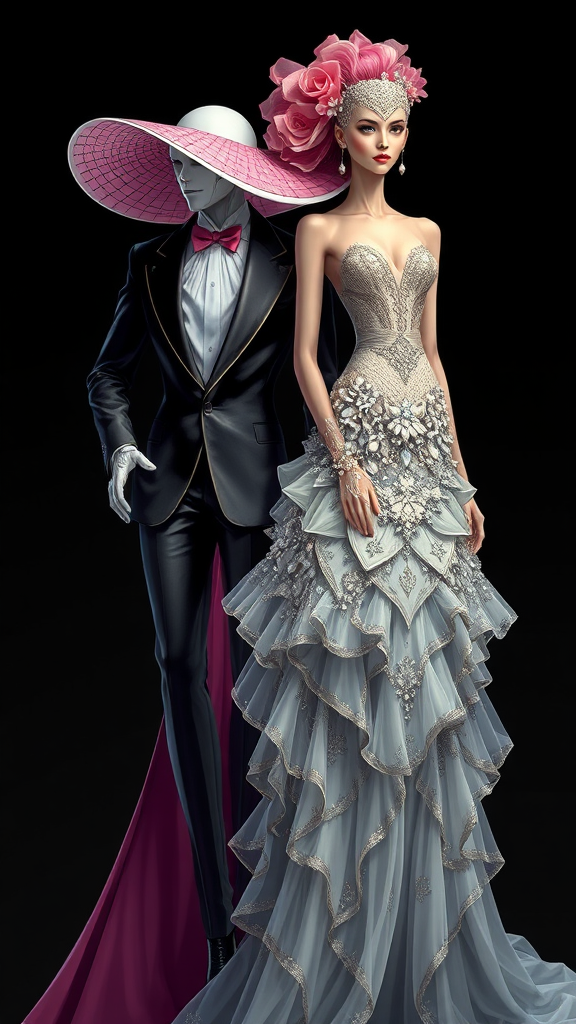
Couture and Haute Couture, two terms often used interchangeably in the fashion industry, signify the very pinnacle of fashion design. They represent an incredible fusion of craftsmanship, creativity, and luxury. But what exactly are they and how have they evolved over time?
In the heart of Paris, the term “Haute Couture” was born.
It literally translates to “high dressmaking” and refers to the creation of exclusive custom-fitted clothing. Haute Couture is a legally protected term in France, with strict criteria to meet before a fashion house is permitted to use it. Couture, on the other hand, is derived from the French word “couturier” meaning a dressmaker or designer. Thus, all Haute Couture is Couture, but not all Couture is Haute Couture.
During the 19th century, these craft-intensive, extravagant designs were primarily enjoyed by the rich and elite. Today, while still maintaining their roots in luxury, Couture and Haute Couture have become more accessible, thanks to the rise of digital platforms and the proliferation of fashion weeks around the globe.
The evolution of Couture and Haute Couture is intrinsically linked with changes in society and culture. Initially, these clothes were tailored for aristocratic and royal clientele, with each piece painstakingly hand-sewn by skilled seamstresses. However, things have changed recently with the fashion industry’s shift towards sustainability and innovation. Designers are now using Couture as a platform to experiment with eco-friendly materials and innovative designs, giving the age-old tradition a modern twist.
Today, Haute Couture remains the pinnacle of the fashion industry, representing the ultimate expression of craftsmanship and artistry in fashion. The garments produced under this designation are often intricate works of art, utilizing the finest materials and meticulous hand-sewn techniques. They command a high price tag, but in exchange, they offer exclusivity and unparalleled craftsmanship that can’t be replicated by mass-produced clothing.
Couture, on the other hand, has become more mainstream over the years. Couture now doesn’t always mean bespoke or one-of-a-kind.
Many fashion houses are offering Couture collections that are ready-to-wear, making the once-exclusive realm accessible to a broader audience. This has opened up a new market for fashion enthusiasts who appreciate high-quality design and craftsmanship but do not necessarily want or need a custom-fitted garment.
The democratization of Couture and Haute Couture is a testament to the changing landscape of the fashion industry. Today, it is not just about extravagance and exclusivity but also about accessibility and sustainability. This shift has sparked a fresh wave of interest in these high-end designs, bringing them back to the forefront of the fashion world.
It’s fascinating to observe the continuous evolution of Couture and Haute Couture. Even though they have traveled a long way from their origin, they continue to captivate us with their elegance, craftsmanship, and artistry. They are more than just garments; they are pieces of art that tell stories, reflect cultures, and inspire generations.
As we look forward to the future of fashion, one thing is certain – Couture and Haute Couture will continue to dazzle us, pushing the boundaries of creativity and craftsmanship in the world of style, setting the bar high for fashion enthusiasts and designers alike.